
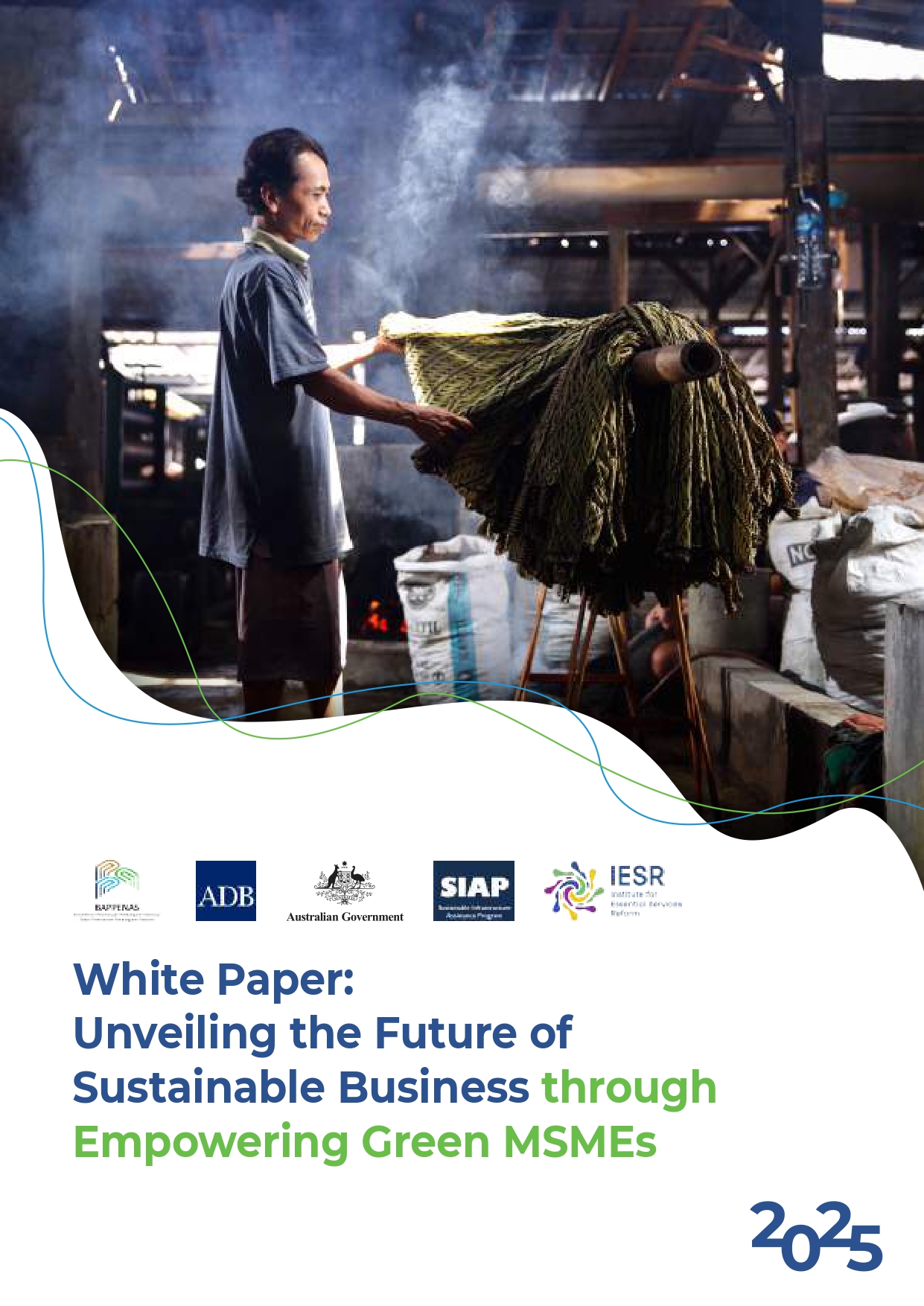
Green SMEs and Net Zero- Strategic Framework for Indonesia’s Climate-Aligned Economic Transformation (2025)
White Paper: Unveiling the Future of Sustainable Business through Empowering Green MSMEs
Micro, Small, and Medium Enterprises (MSMEs) are the backbone of Indonesia’s economy. According to data from Statistics Indonesia (BPS), the number of MSMEs has reached more than 56.14 million business units in 2024, employing approximately 97% of the workforce and contributing 61% of the Gross Domestic Product (GDP). With this scale, MSMEs play a strategic role not only as the foundation of the national economy but also as a driver of transformation toward a green economy aligned with Indonesia’s long term development targets.
Metadata Dokumen
| Bidang Kategori | Bidang Pemberdayaan Masyarakat, Kependudukan, dan Ketenagakerjaan |
| Unit Kerja | Direktorat Koperasi dan Usaha Mikro, Kecil, dan Menengah |
| Jenis Pengetahuan | Pengetahuan Explicit |
| Jenis Output | kajian |
| Referensi yang Digunakan | Literature review, using a qualitative approach including interviews with experts. |
| Mitra (Unit Kerja/Instansi Lain) | Internal UKE (Direktorat Koperasi dan Usaha Mikro, Kecil, dan Menengah) Instansi lain (ADB, Australian Government, SIAP, IESR) |
| Bisnis Proses |
1. Green SME Roadmap. Develop indicators for green SMEs, pilot sectors with high adoption readiness, and set a phased transition schedule until 2045. |
| Manfaat | - Developing a classification for green SMEs and initiating pilot projects in priority sectors. - Strengthening coordination between ministries and local governments. - Creating inclusive innovative financing frameworks. - Developing a green literacy curriculum for MSMEs. - Harmonizing national policies with regional initiatives, such as those in ASEAN. |
| Hak Akses Dokumen | Terbuka |
| Dokumen Pengetahuan | |
| Tanggal Publikasi | 26 November 2025 20:08:29 |
| Video | - |